
You want nostalgic Christmas rooms that feel collected, but random antique finds can quickly look cluttered. Eight era-based formulas, from Victorian paper ornaments to 1970s homespun woodland decor, start with one defining piece, then pair it with matching colors and well-chosen reproductions.
The difference is repetition. Burgundy paper, moss-green branches, or soft amber light looks intentional when the same shade appears several times across a display. Let one material and a tight color palette guide the room, and the details below become much easier to picture and use.
1. Victorian Feather Tree Parlor
A crowded mix of antique-style pieces can make a Victorian room feel more like a shop display than a parlor.
Start With the Tree
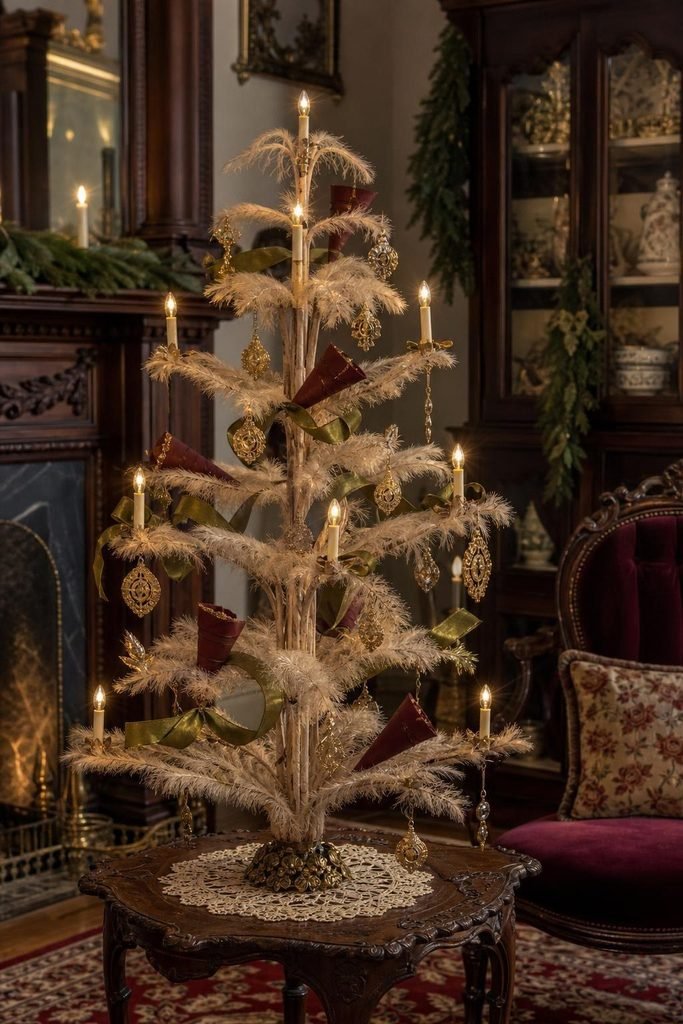
Place a reproduction feather tree on a small table where its open branches can show. Treat it as the Victorian focal piece, then add burgundy paper cornucopias, moss-green ribbon, and antique-gold Dresden-style ornaments.
Clip electric candles near the branch tips to cast a warm, old-fashioned glow. Never use real flames beside feathers or paper. Leave space between ornaments so the unusual branch shape stays visible.
2. Edwardian Postcard Mantel
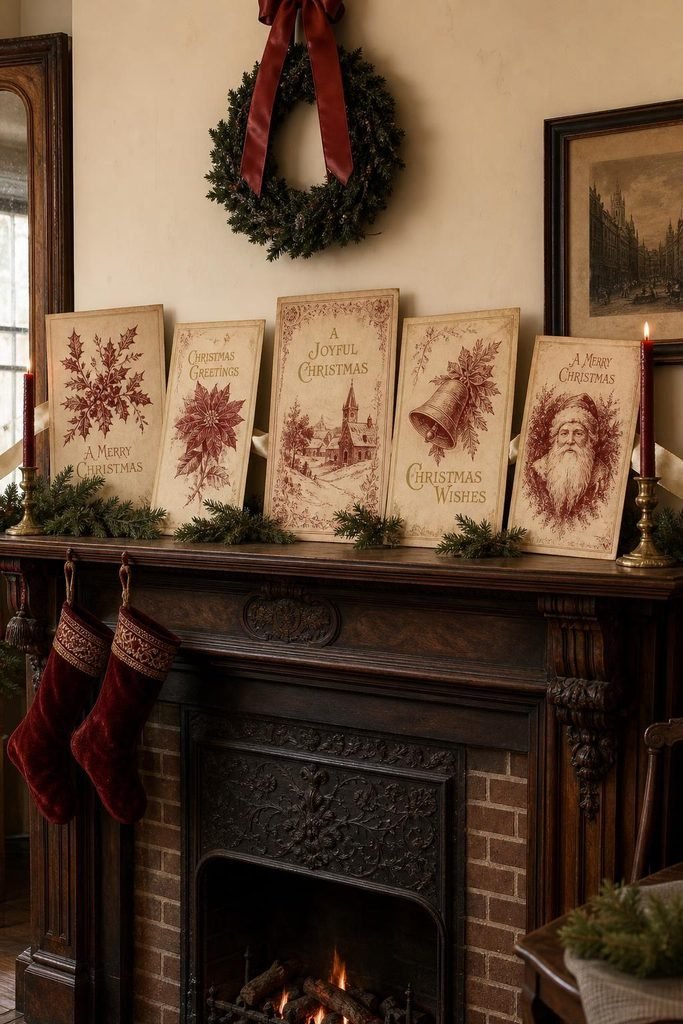
Enlarge reproduction Christmas postcards to about book-page size, then lean them across the mantel at slightly different heights. Their aged ivory paper, oxblood red details, and muted gold lettering create a strong postcard display without costly originals.
- Thread ivory ribbon behind the cards instead of covering their printed edges.
- Tuck short pieces of evergreen between frames, leaving plenty of open mantel space.
Repeat oxblood red in candleholders or stockings. Skip bright modern gift wrap nearby, since sharp neon colors and glossy patterns can break the softer Edwardian palette.
3. Twenties Store Window Tableau
Use three riser heights. This simple choice gives a tabletop display the depth and drama of a 1920s department-store window.
Build the Display
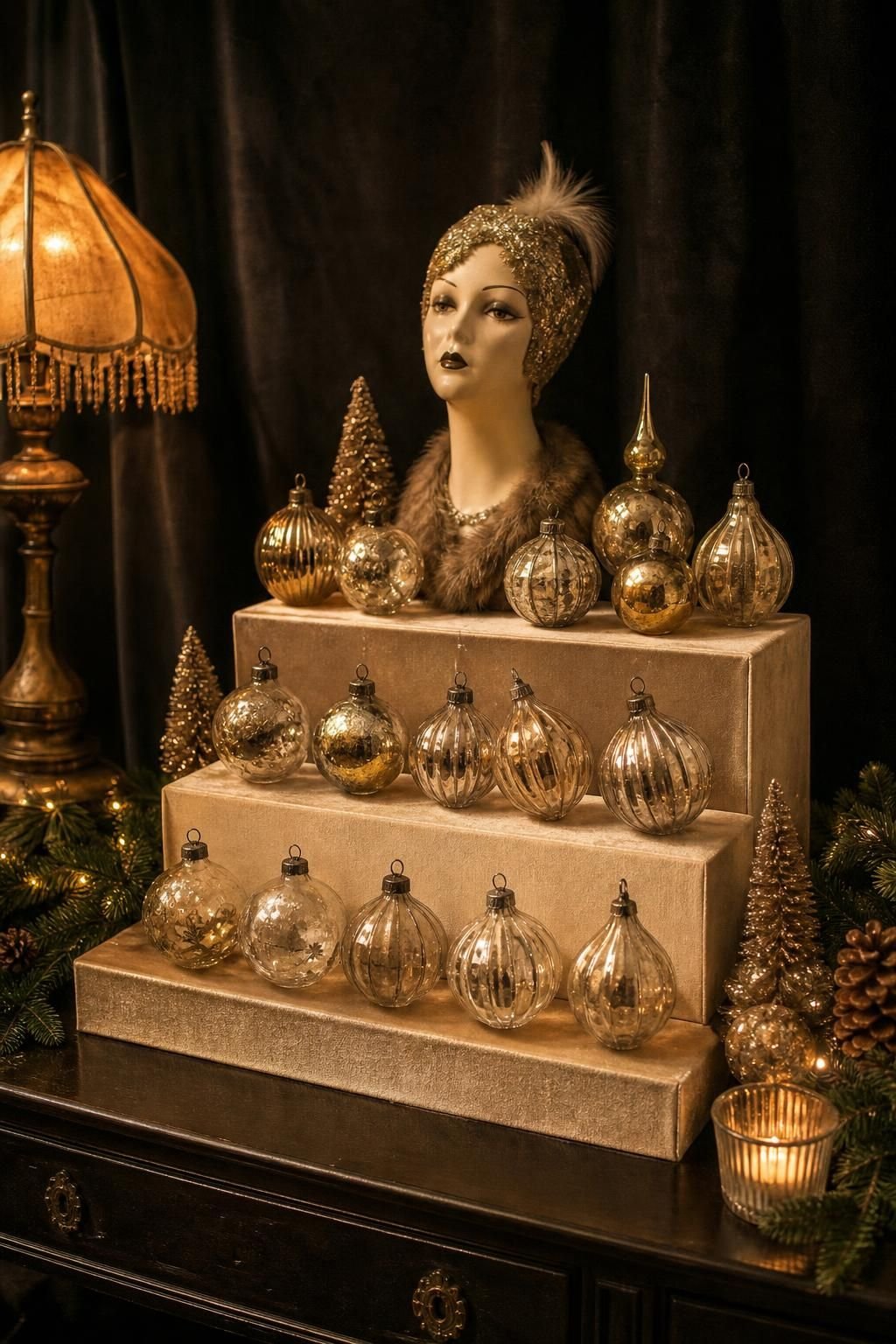
Cover sturdy boxes with cream paper or velvet, then arrange them from low to high. Repeat glass ornaments across all three levels rather than placing a different object on every surface. The repeated shapes make the tabletop tableau look planned.
Add a Theatrical Focus
Set a reproduction mannequin head or toy sleigh on the tallest riser. Choose one-color amber lighting and aim it from the side, so the glass catches warm highlights after dark.
Keep the background plain. A dark cloth or unpatterned wall lets the staged shapes hold attention without requiring rare display antiques.
4. Thirties Shiny Ornament Wreath
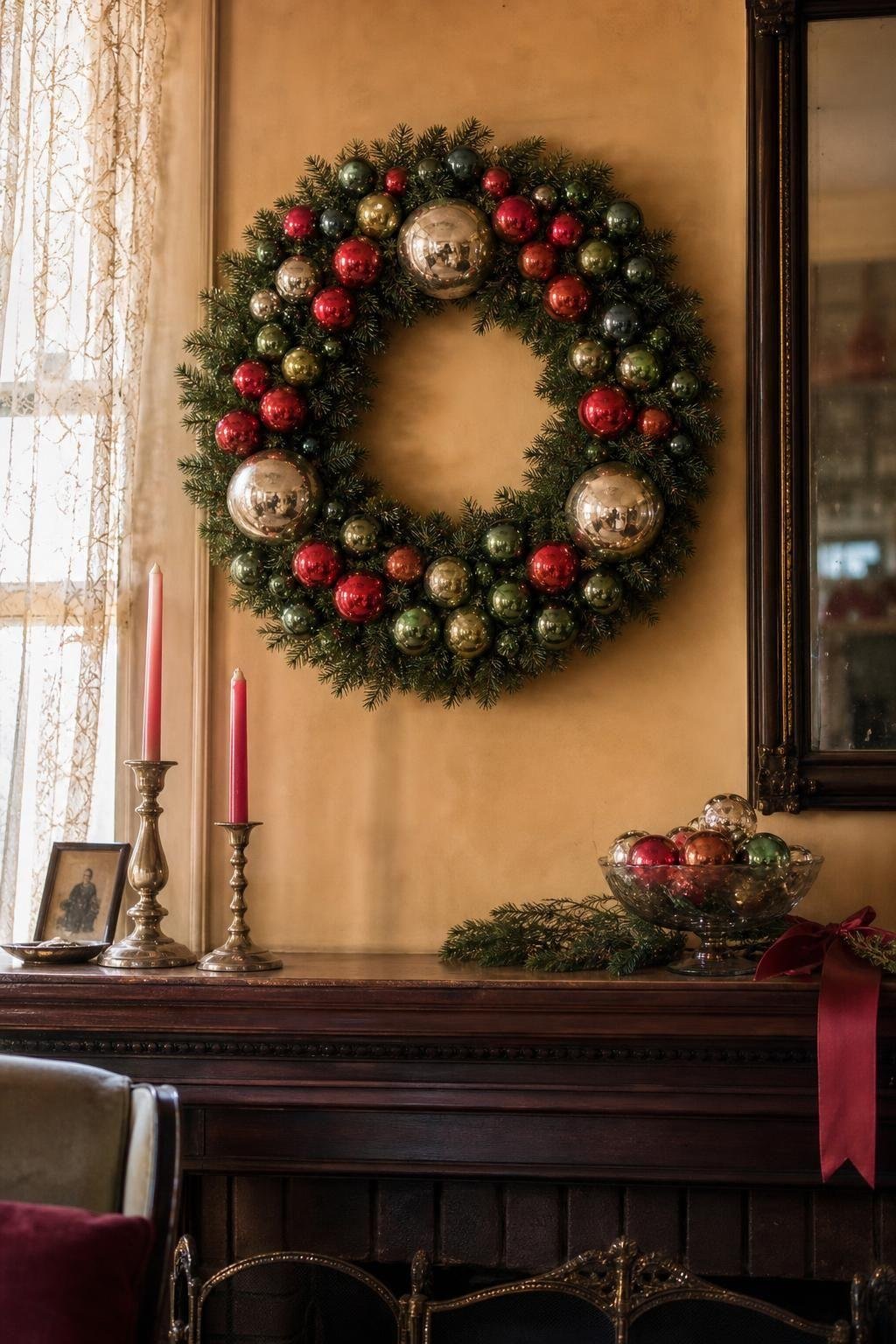
Scattering every ornament color around a wreath often creates visual noise. Cluster reproduction glass balls by color instead, using silver, red, and faded green in separate groups for a more deliberate 1930s look.
Begin with a firm wreath base and place the largest silver balls at three points around it. Fill the spaces with medium red ornaments, then work faded green balls toward the inner and outer edges. This color clustering keeps the limited Depression-era palette clear.
Mix glossy and softly aged finishes, but keep the ornament shapes simple. Shiny Brite-style balls carry the design, so extra bows, signs, and novelty picks can make the wreath feel too busy.
Hang it above a mantel or sideboard where light can reach the glass. Repeat one cluster color elsewhere in the room with a bowl of ornaments, a narrow ribbon, or a few hand-painted tree decorations. The wreath will still lead the scheme, while the repeated shade ties the room together.
5. Forties Paper-and-Pine Christmas
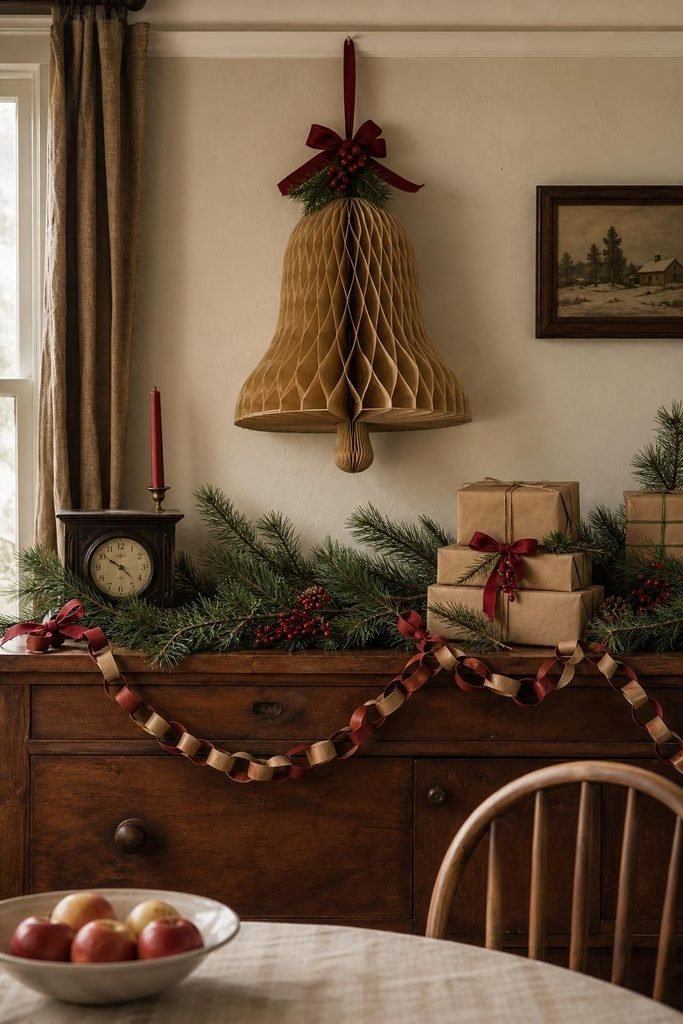
Instead of filling every doorway with paper chains, create one strong wartime-inspired display. Hang an oversized honeycomb bell above a mantel, sideboard, or dining table.
Keep the Materials Simple
- Tuck fresh or faux pine branches below the bell.
- Wrap small boxes in plain kraft paper.
- Add cranberry red ribbon or berries.
- Make short chains from evenly cut paper strips.
Repeat the red in two or three places so the display feels planned. Matte paper works better than glossy finishes for this practical 1940s look.
6. Fifties Aluminum Tree Glamour
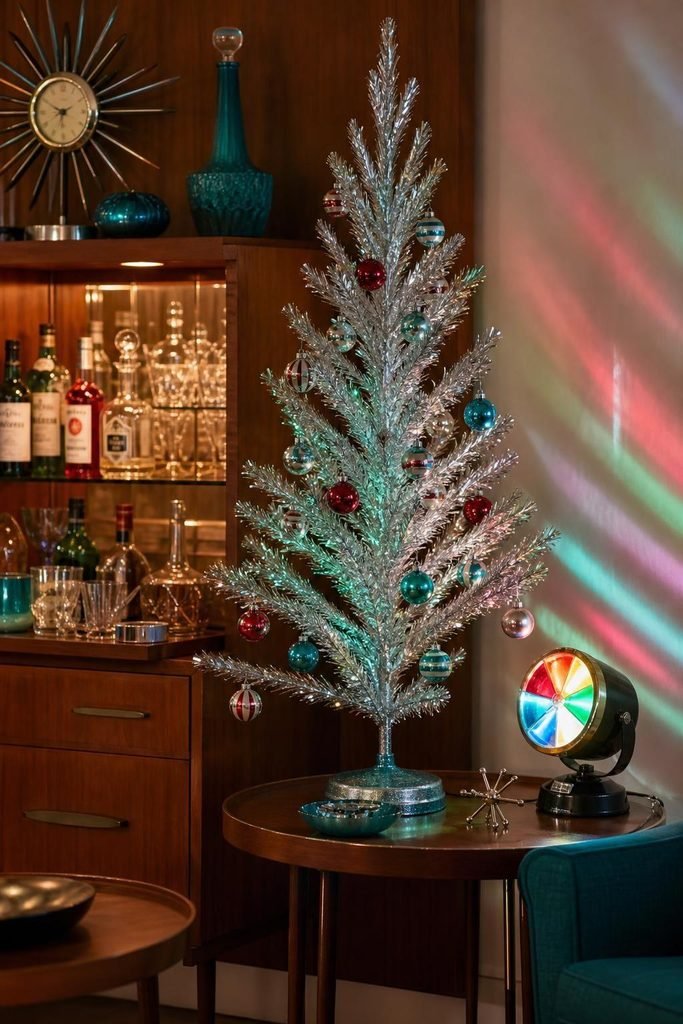
Picture a tabletop tree glowing beside a cocktail cabinet as silver branches catch soft bands of color. A tabletop aluminum tree quickly sets the 1950s mood without taking over the room.
Choose Period Colors
Hang turquoise, silver, and cherry-red ornaments with space between them. Glass-style reproductions give you the look of hand-painted and Shiny Brite ornaments at a lower cost.
Place a reproduction color wheel or stationary spotlight several feet away. Don’t string hot incandescent lights directly on metal branches. The changing light should reflect across the tree, letting the silver surface create most of the sparkle.
7. Sixties Ceramic Tree Kitsch
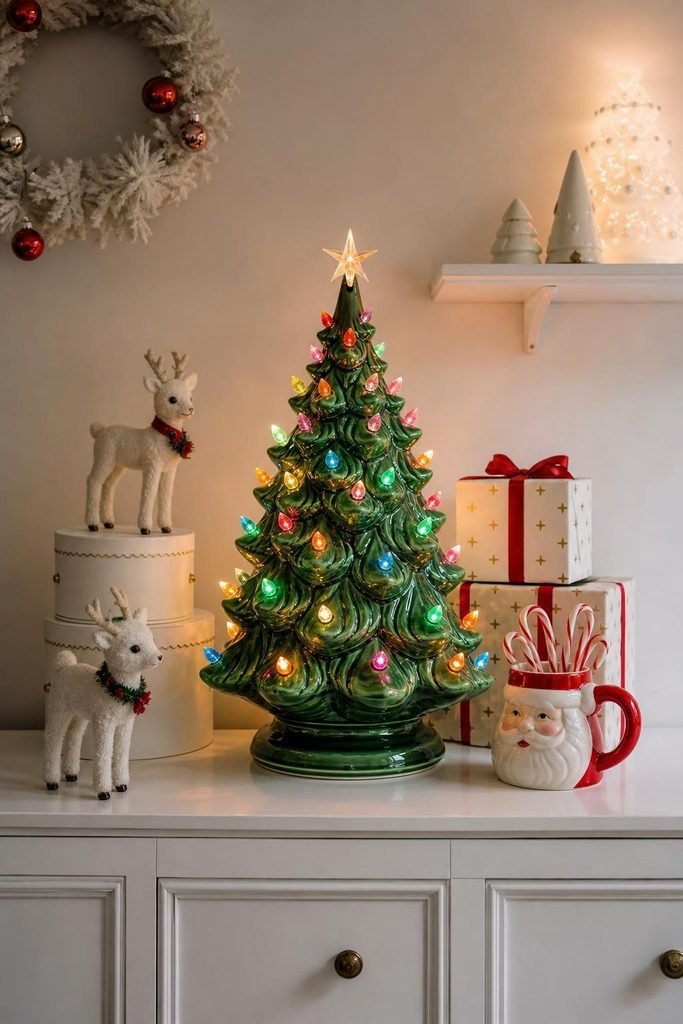
How do you display playful holiday kitsch without creating clutter? Start with one illuminated ceramic Christmas tree on a white credenza or low cabinet.
Let its jewel-toned bulbs guide the rest of the arrangement. Leave open space around each piece, then add a few supporting details:
- Place two flocked reindeer at different heights.
- Stack reproduction gift boxes behind the tree.
- Repeat one bulb color in ribbon or wrapping paper.
- Hide cords behind the cabinet or inside a cable cover.
Keep the wall, tabletop, and nearby objects mostly white. This clean background makes green glaze, bright bulbs, and red accents look deliberate. A small Santa mug can hold candy canes nearby, but avoid lining up a full collection.
Switch on the ceramic tree at dusk and check the balance from across the room. If the reindeer or boxes compete with its glow, remove one item rather than adding another.
8. Seventies Homespun Woodland Warmth
This look suits anyone who loves handmade texture and earthy color. Skip it if glossy metallic finishes and sharp sparkle define your holiday style.
Choose a Textile Anchor
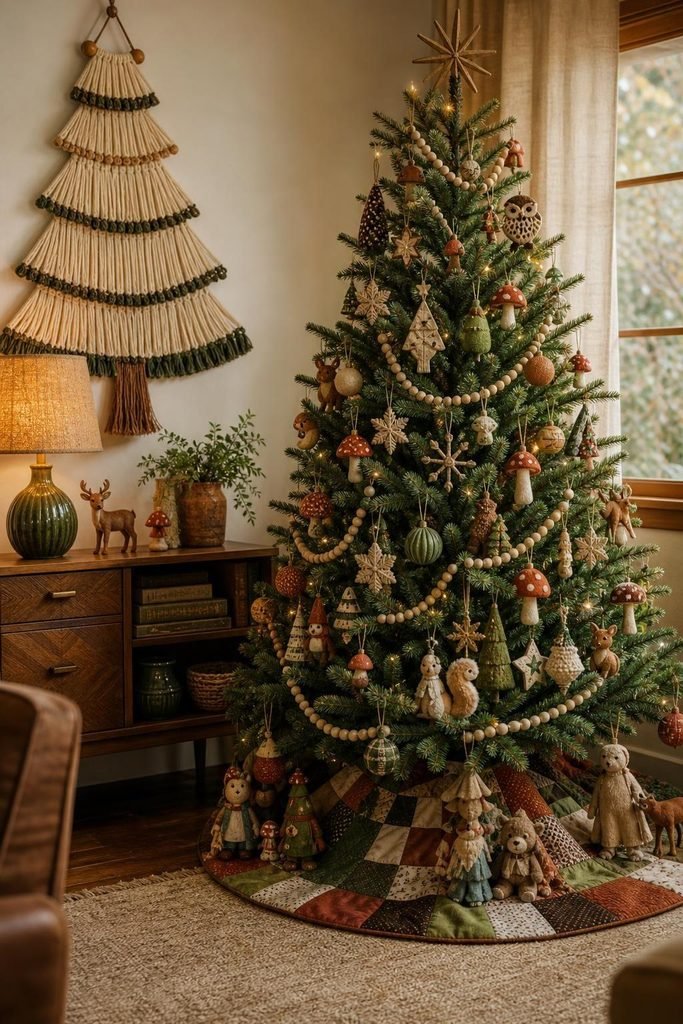
Hang a macramé wall tree above a console, or place a patchwork skirt beneath the main tree. Build the palette with rust, avocado green, and warm cream.
Add Woodland Details
Use wood bead garlands, felt mushrooms, and reproduction spun-cotton figures. Natural wood, wool felt, cotton, and thick yarn support the cozy 1970s mood. Space the figures between branches or along the skirt so every handmade shape remains easy to see.
Where to Begin
Choose the focal piece that fits a room you already use during the holidays. A ceramic tree works well on a credenza near an outlet, while an aluminum tree needs open space for reflected light. Measure the surface before buying a reproduction, and photograph the area in daylight to check its colors.
Once the main piece has a place, pull two or three supporting shades from it. This simple limit keeps nostalgic decorations from looking random. You can also repeat one material elsewhere, such as kraft paper on gifts or wood beads across a shelf.
A thoughtful display can connect distant eras with ease: the plain paper of a 1940s chain can sit comfortably beside the warm handmade texture of a 1970s patchwork skirt.