
Nordic Christmas style should feel quiet, warm, and lived-in—not empty or showroom-perfect. These 10 recognizable decorating mistakes each have a specific fix that preserves simplicity while adding comfort.
The real difference is contrast: bright white beside sharp red can feel cold, but ivory, pale wood, soft wool, and warm candlelight give the eye a gentler place to rest. The choices below show where calm holiday rooms often go wrong and how thoughtful color, scale, and texture can correct them.
1. Avoid the Clinical White Trap
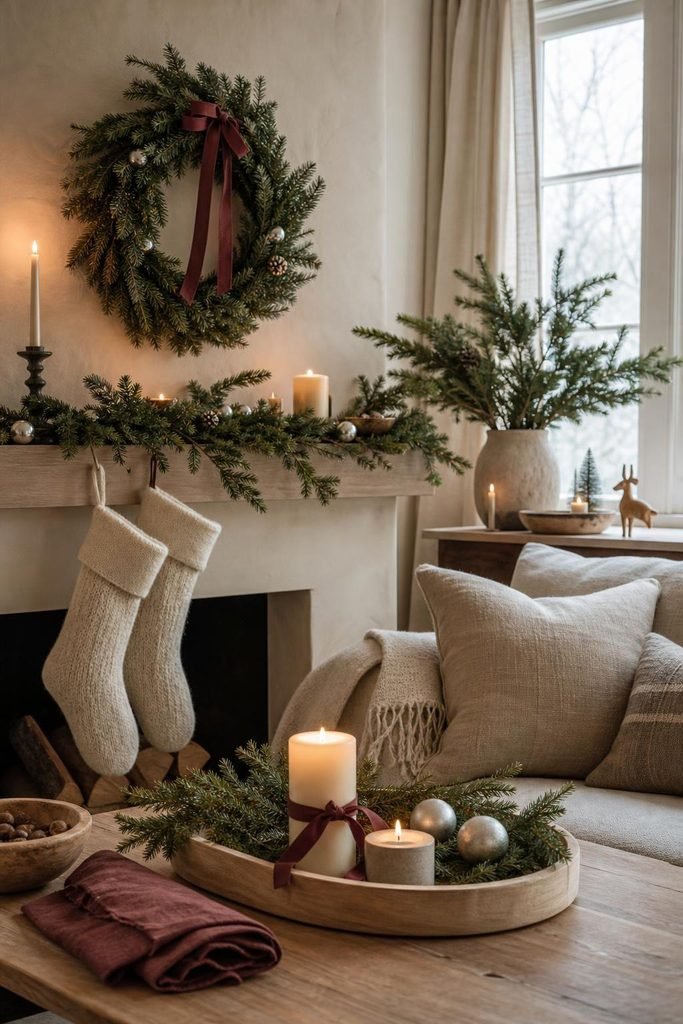
Does your white holiday decor feel colder than expected? Stark white walls, silver ornaments, and one bright red accent can create hard visual edges, especially in rooms with cool daylight.
Warm the Base First
Build a warm neutral palette before adding seasonal color. Use ivory rather than pure white, oatmeal fabric instead of cool gray, and pale or honey-toned wood in trays, frames, and candleholders.
- Choose muted cranberry for a soft traditional note.
- Use forest green for a calmer, nature-led look.
- Keep silver to small details with a dull or brushed finish.
- Repeat your chosen accent in two or three visible places.
Pick either muted red or forest green as the main accent rather than giving both equal weight. Repeating one color across cushions, ribbon, and table linens keeps the room connected without making it look heavily decorated.
2. Stop Scattering Tiny Decorations
This approach suits anyone whose shelves fill up with miniature trees, houses, and figures. Skip it only if a collected holiday village holds real meaning and already has one clear display area.
Choose One Larger Shape
Many small objects create visual static, even when every piece is white or made from natural wood. Your eye keeps stopping, so the room feels busier than its color palette suggests.
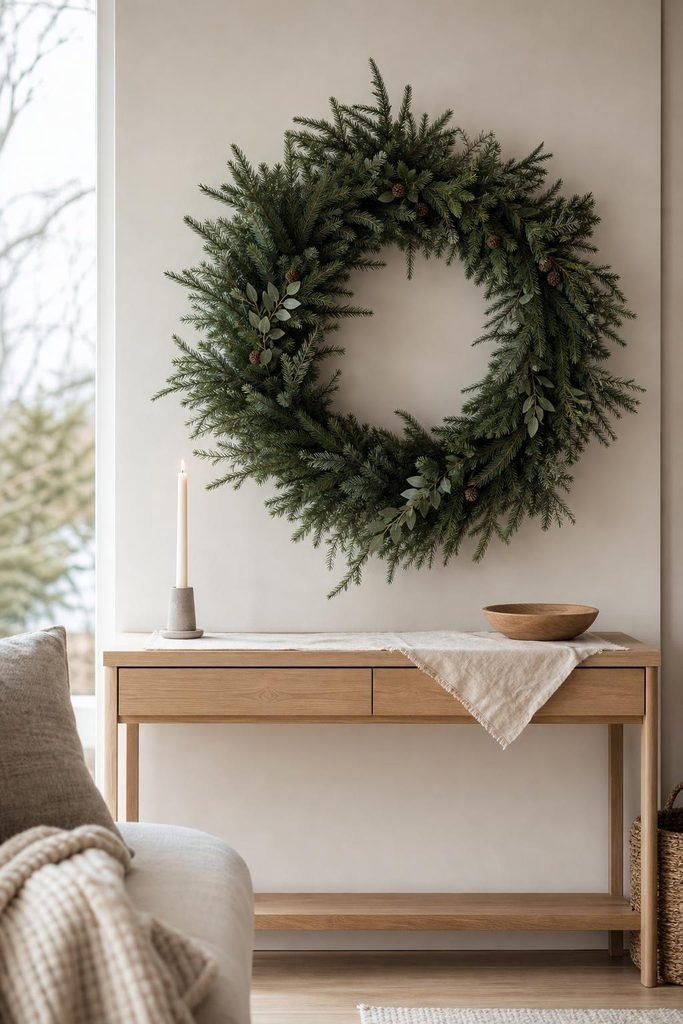
Replace scattered pieces with one tall branch arrangement in a stoneware jug, a large folded-paper star in a window, or a generous wreath above a console. Leave the nearby surface mostly clear, with enough open space around the object to show its outline.
Scale also reads better from across the room. A single strong shape gives the display purpose, while a row of tiny items can fade into clutter.
3. Plan Empty Space Before Decorating
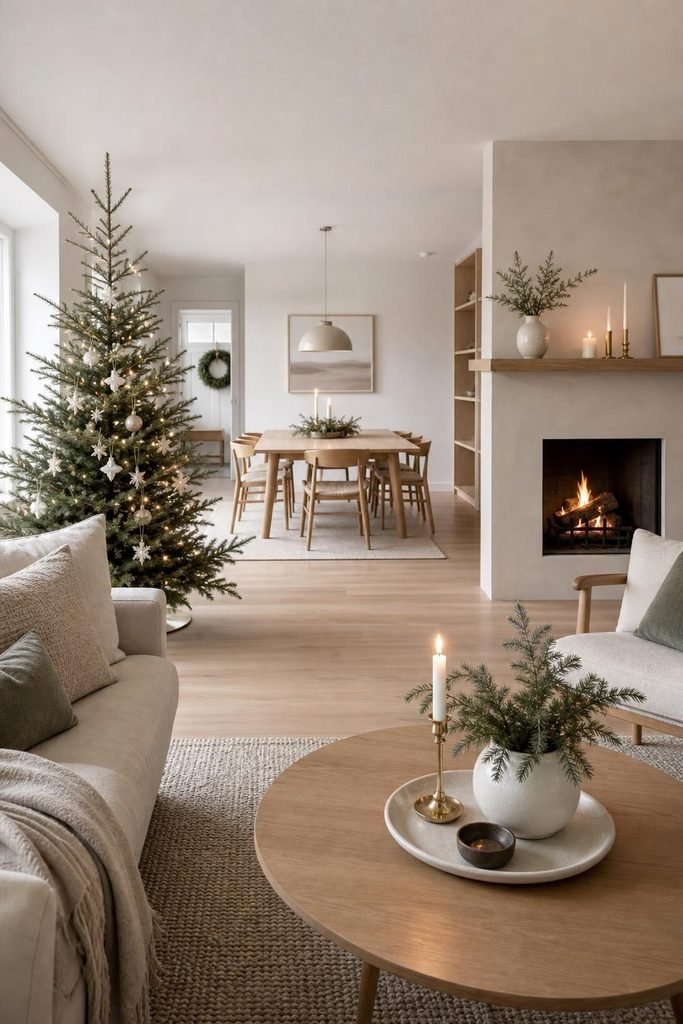
This fixes the urge to line every mantel, sill, and shelf with holiday objects. Before opening the decoration boxes, make a quick room sketch and mark three focal zones.
- Place the tree in the main living area.
- Center the dining table with one low arrangement.
- Give the entry one wreath, branch, or paper star.
Keep open sightlines between these zones. Clear the walking route around the tree, leave part of the mantel bare, and let at least one shelf remain undecorated.
Existing clutter should go first, since holiday pieces need a clean backdrop. Put away loose mail, spare baskets, and unrelated ornaments rather than shifting them to another visible surface.
4. Add Textiles Where Bodies Rest
A wool rug under the sofa area should extend beneath the front legs of the main seats. This anchors the furniture and places warmth exactly where feet touch the floor.
Soften Useful Places
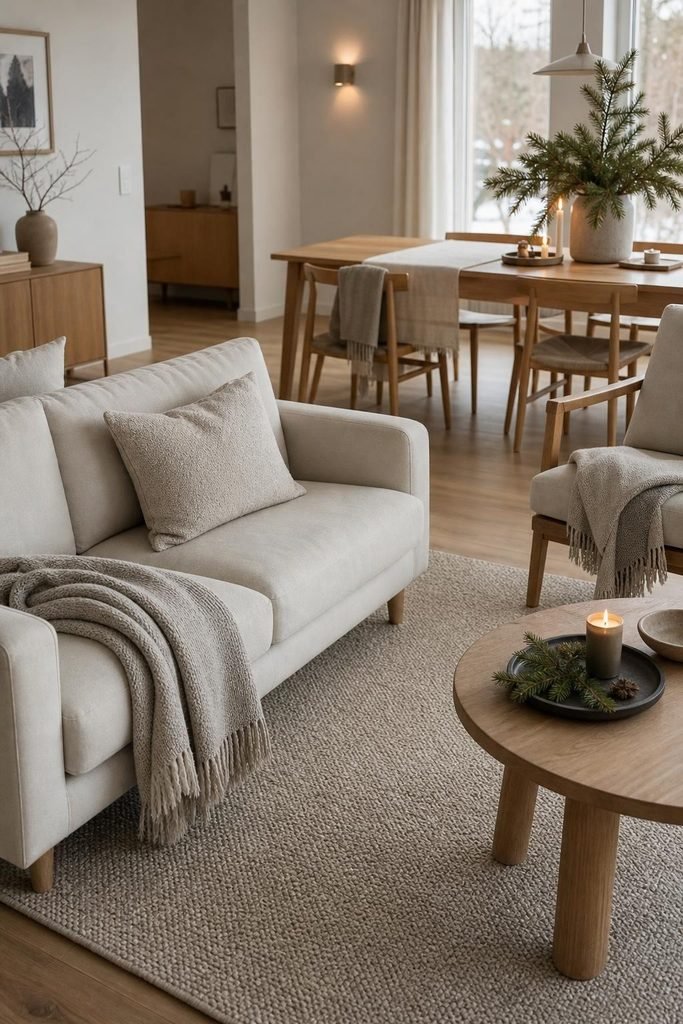
Minimal rooms feel bare when softness appears only as decoration. Add layered textiles where people sit, walk, dine, or reach for warmth: a wool throw over the sofa arm, a linen runner down the table, or a sheepskin on one often-used chair.
Natural fibers tend to sit quietly within Nordic holiday decor. Linen has a relaxed surface, fine wool holds warmth without looking bulky, and cotton offers an easy choice for cushion covers and napkins.
Limit the Coverage
Keep some wood, stone, or painted surfaces visible. Covering every chair and tabletop hides the clean lines that make the room feel calm.
Choose two or three textile colors from the same warm family, such as oatmeal, ivory, and soft gray. Vary the weave rather than adding more shades, then fold throws neatly enough to look intentional but loose enough to invite use.
5. Curb the Rustic Cabin Clichés
Pair one rough texture with one smooth material. A chunky wool cushion works beside plain linen, and a faux-fur rug feels calmer near unfinished wood than beside burlap, plaid, and more heavy knits.
Too many rustic details can make the room resemble a themed lodge. Use balanced texture by choosing one nubby material as the feature, then giving it space among fine wool, pale timber, matte ceramics, or smooth cotton.
Handmade decorations still belong here. Hang a simple paper ornament, place carved wood pieces on the table, or tie gifts with reusable cloth and plain paper. Keep ribbon narrow and colors restrained so the wrapping supports the room instead of competing with it.
Step back from the doorway before adding another rustic piece. If one material already draws the eye, repeat it once at most and let the cleaner surfaces carry the rest of the setting.
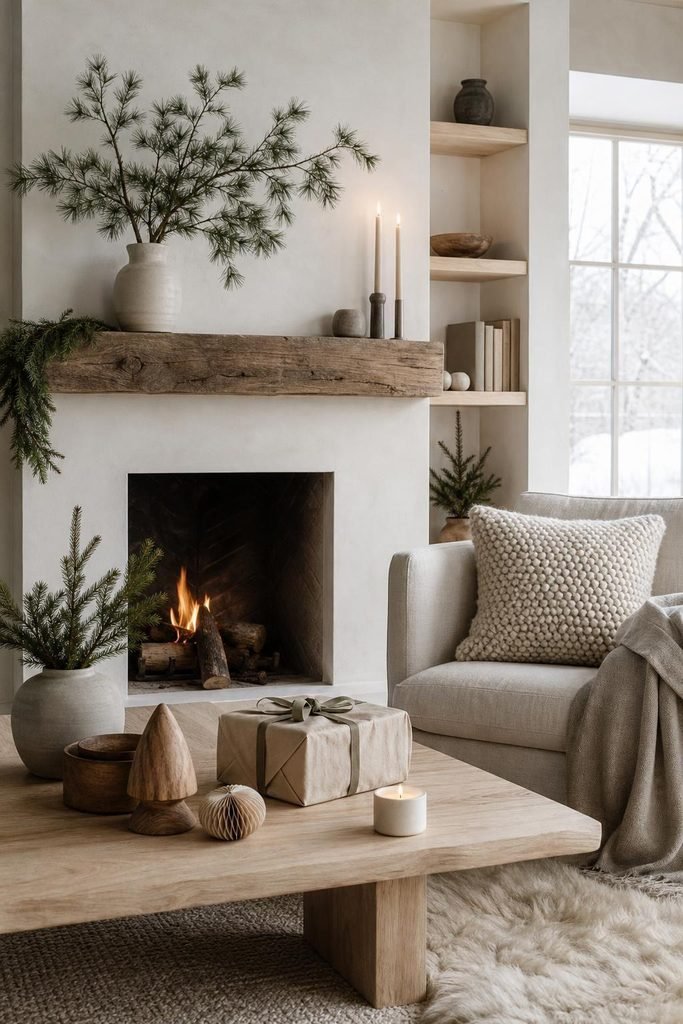
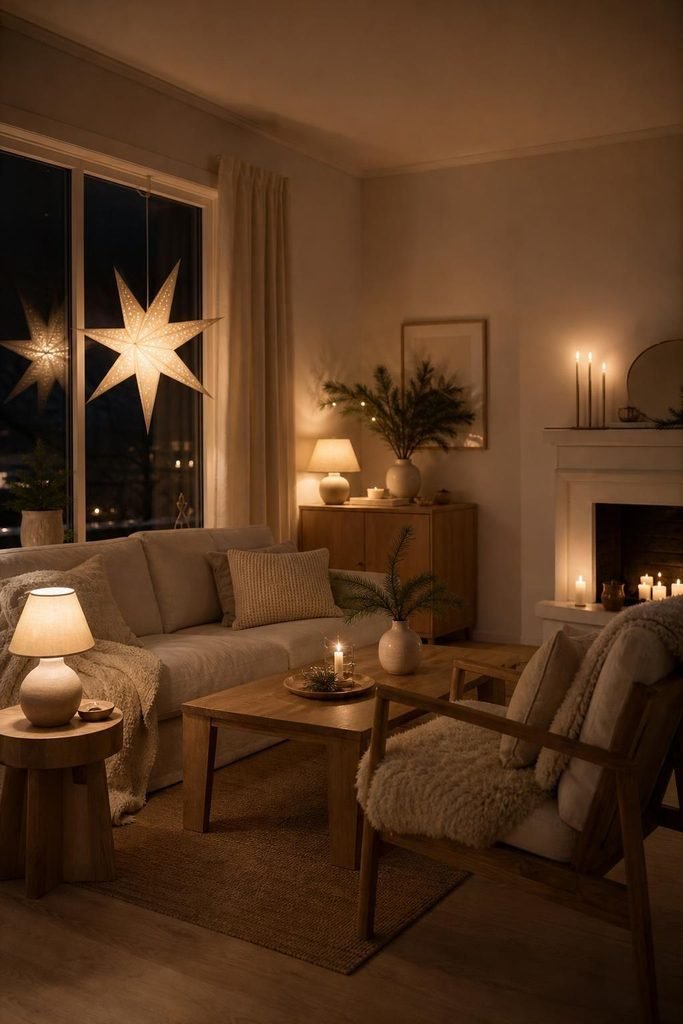
6. Layer Light Instead of Glare
A harsh ceiling light can flatten the room and expose every corner. Create a softer glow by placing light at several heights.
Build a Warm Lighting Mix
- Hang warm-white paper stars in the windows.
- Place shaded table lamps near chairs and sofas.
- Add candles or flameless tapers to mantels and sideboards.
- Hide cords behind furniture and keep walking paths clear.
Skip flashing strings and cool-white bulbs, which can feel busy or sharp. Turn on each light after sunset, then remove any source that pulls too much attention from the room.
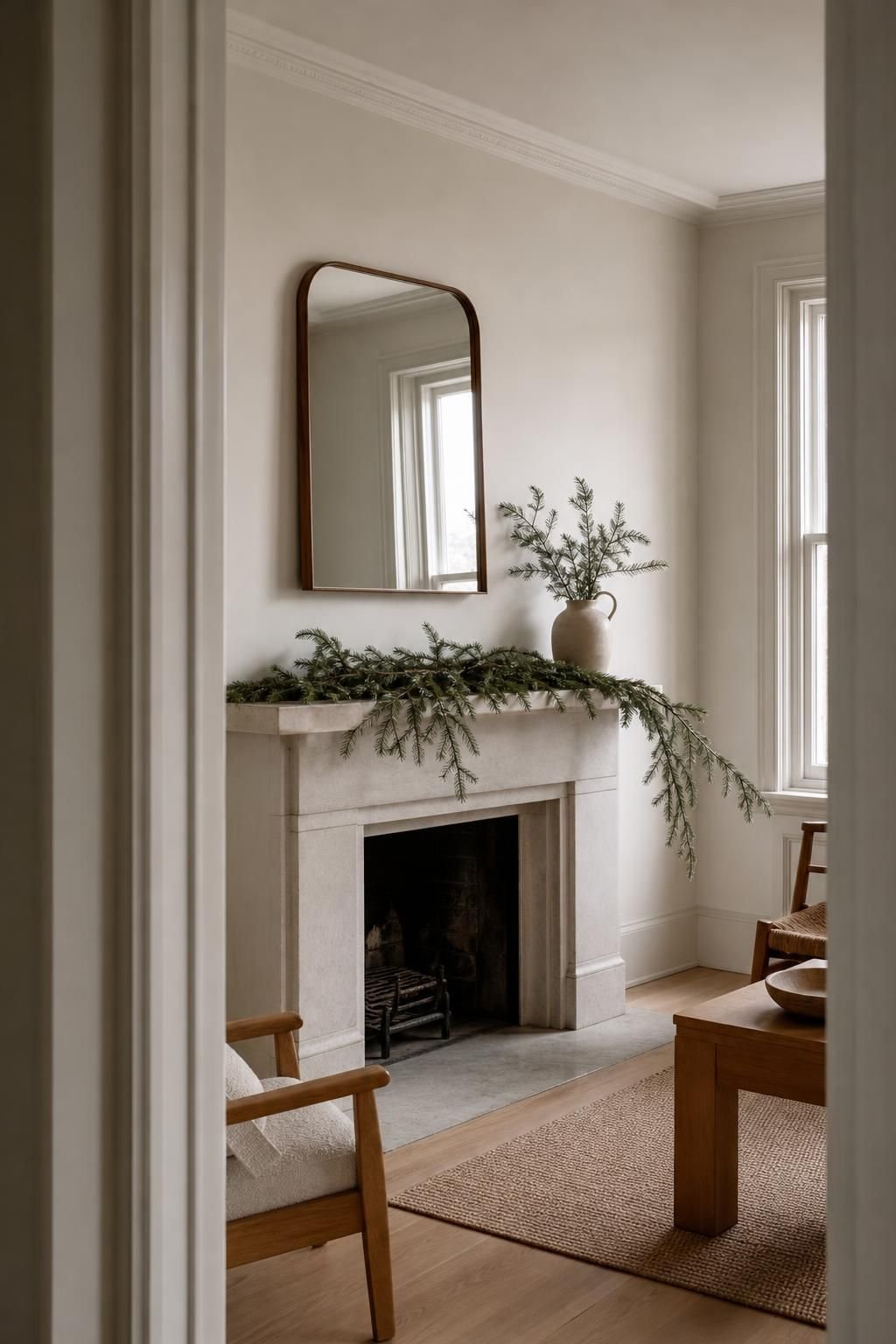
7. One Branch Beats Heavy Garland
Wall-to-wall garland can hide the clean lines that make Nordic rooms feel calm. A single branch creates a clearer, more graceful greenery gesture.
Follow the Room’s Architecture
Drape one asymmetrical spruce branch across part of the mantel rather than covering its full width. Let the branch follow an existing edge, such as a shelf, window frame, or stair rail. Secure it with thin green wire placed out of sight.
For a second natural detail, arrange a few juniper cuttings in a matte stoneware jug. Keep the stems loose and uneven so their natural shape remains visible. Light wood, pale pottery, and simple greens work better here than glossy containers.
Step back and check the result from the doorway. Remove any stem that blocks a mirror, trim, or architectural feature. The greenery should guide the eye through the room instead of becoming a thick border around it.
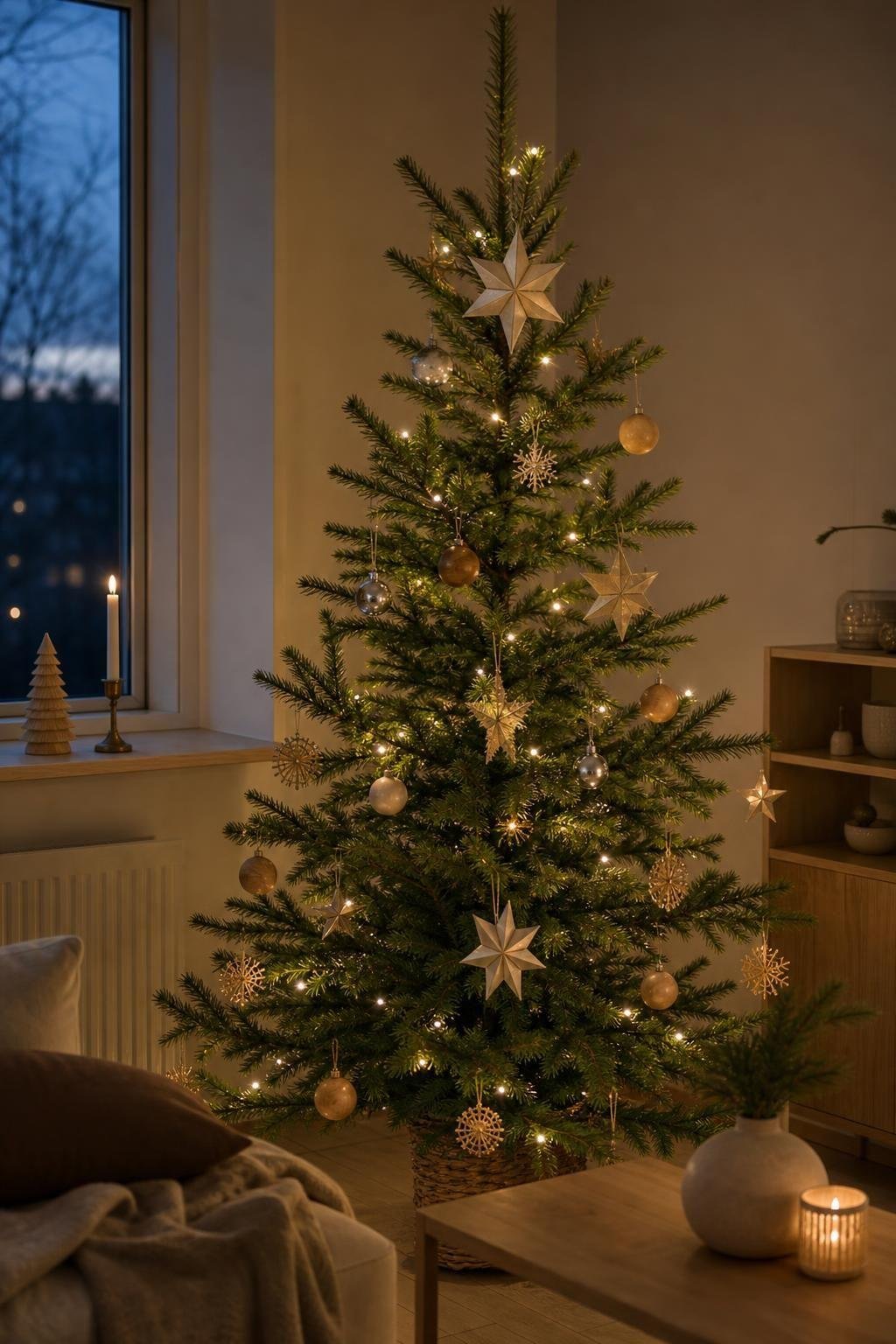
8. Give Ornaments Room to Breathe
Picture a tree at dusk, with warm lights shining through open branches. You can see the needles, branch tips, and natural outline instead of a solid wall of decorations.
Choose a repeatable ornament vocabulary and limit the mix to a few quiet materials:
- Folded paper stars
- Simple straw ornaments
- Plain wooden baubles
- A small number of matte silver accents
Hang one piece, then leave a visible branch tip before adding another. Turn the tree as you work and check it from across the room. Open gaps help each ornament stand out and keep the tree’s natural form at the center.
9. Warmth Without Extra Objects
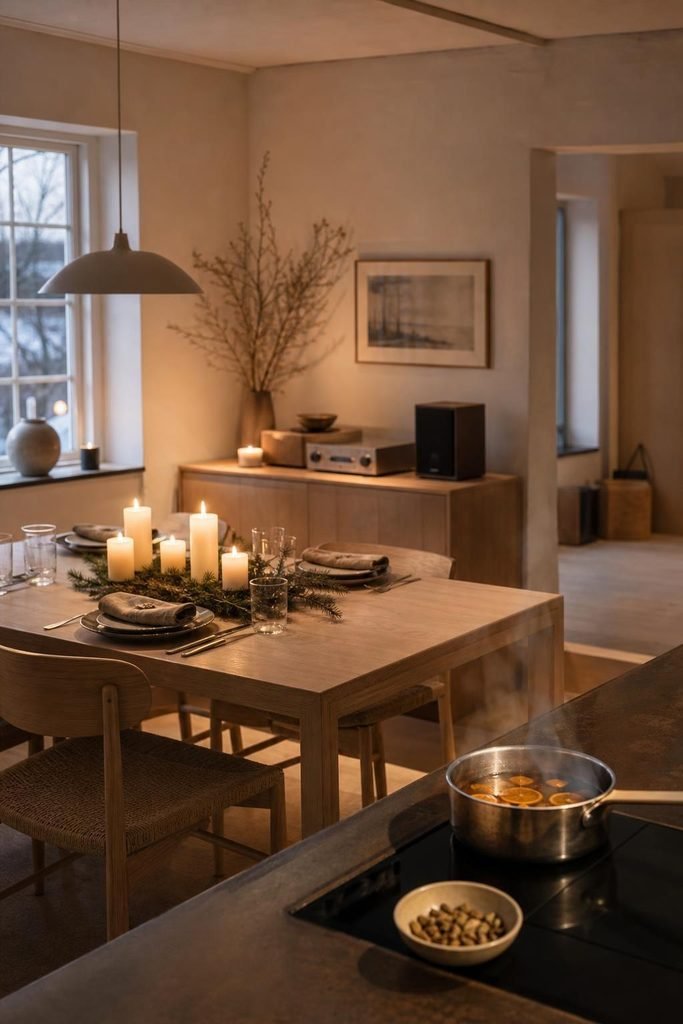
How can a room feel festive without another tray of decorations? Use scent, sound, and candlelight to create quiet atmosphere.
Add a Gentle Seasonal Scent
Simmer orange peel with a few cardamom pods before guests arrive. Keep the heat low, add water as needed, and turn off the burner when you leave the kitchen. Near meals, choose unscented beeswax candles so fragrance doesn’t compete with the food.
Keep Music in the Background
Build a calm playlist with soft instrumental pieces and familiar seasonal songs. Set the volume low enough for easy conversation. These details fill the room with warmth, yet they leave tables, shelves, and walkways free from extra objects.
10. Keep Useful Comforts on Display
This idea suits anyone who finds minimalist rooms too staged. Skip it only if open storage causes stress and you prefer every daily item hidden away.
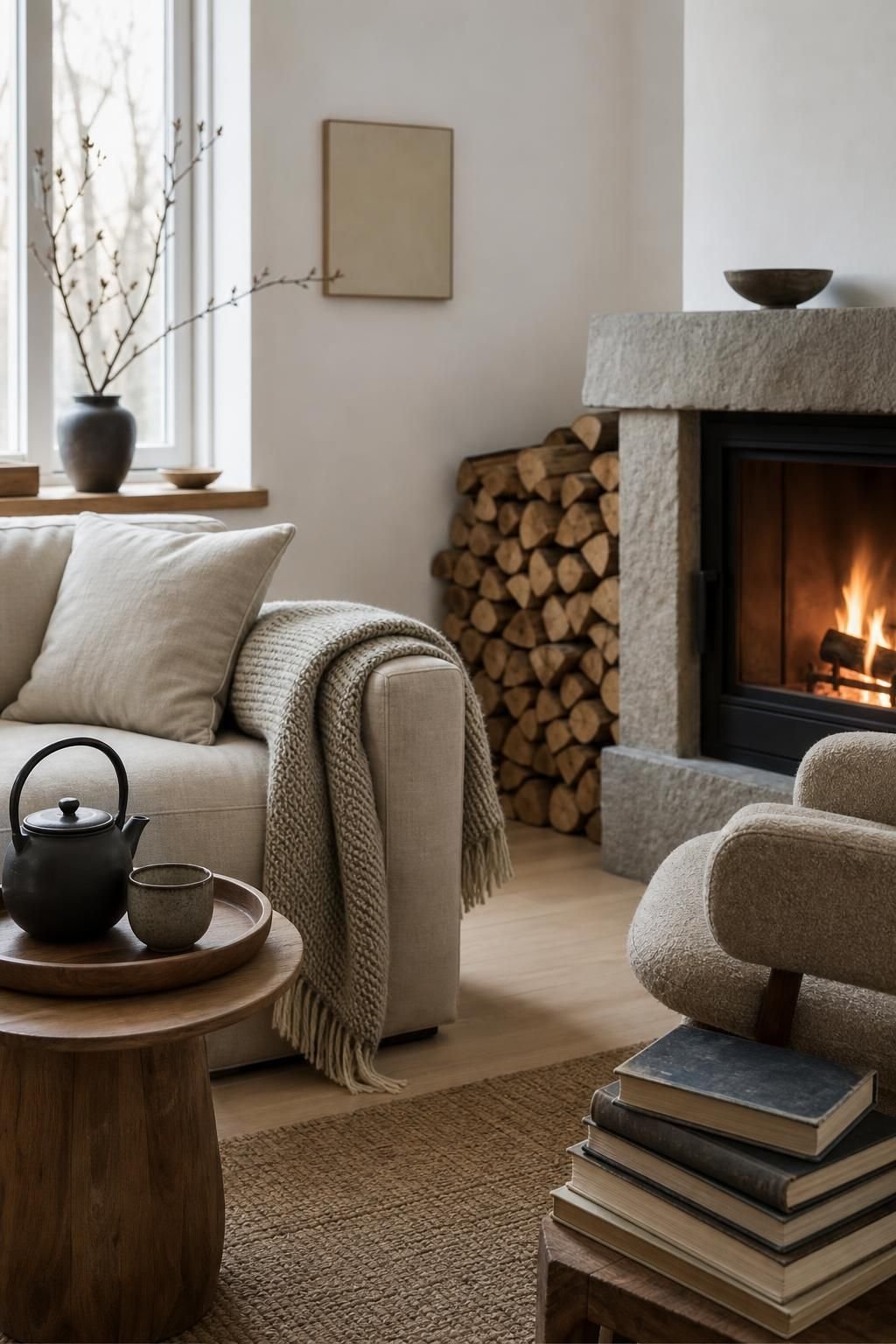
Keep a few everyday comforts in view, then group them by function. Stack firewood beside the hearth, place two well-read books near a chair, and leave a simple tea tray on a side table if you use it often.
Choose items with calm colors and natural materials. Neat placement makes the room feel lived in without creating decorative clutter, and each object remains ready for a winter evening.
Start With the Evening Light
Begin at dusk, when the room reveals which areas feel harsh, empty, or crowded. Turn off the overhead fixture and switch on one shaded lamp, a window star, and a pair of candles. Sit where you usually relax, then check how the light falls across the tree, textiles, and everyday comforts.
This quick test gives you a clear guide for the rest of the room. You may find that a dark corner needs a lamp, while a crowded mantel needs fewer decorations rather than another light source. Avoid the mistake of adding objects whenever a space feels cold. Adjust the lighting first, then bring in only the natural materials and useful comforts the room truly needs.