
Beautiful Christmas decor may already be in your yard, recycling bin, and kitchen cupboards. The difference between polished and makeshift often comes down to repetition, simple shapes, and a tight color palette.
Warm brown pinecones look richer when grouped together, while clear glass catches soft winter light. Saved fabric, bare branches, and plain cardboard gain charm through careful cuts and balanced spacing. The ideas below show how thoughtful styling makes ordinary materials worth keeping.
1. Curate Pinecones Like Tabletop Sculpture
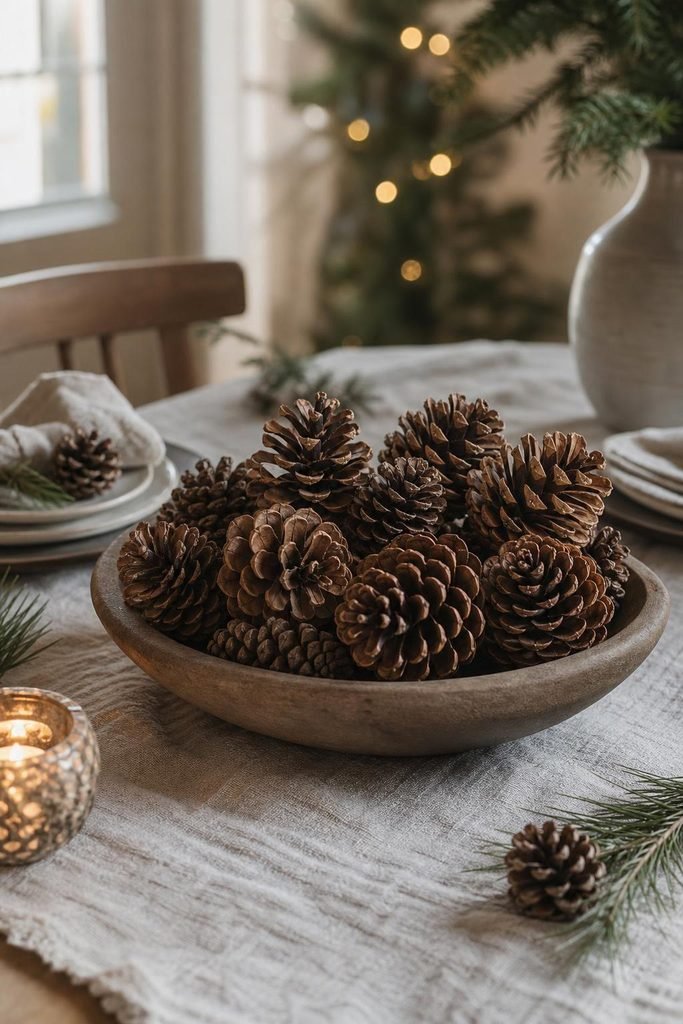
On a winter table, a low bowl of brown pinecones adds quiet texture. Gather only clean, fully dried cones, then mix several sizes for a natural centerpiece. Keep every cone its original brown shade. The limited palette makes the grouping feel collected and calm instead of busy.
2. Style Tiny Winter Branch Bottles
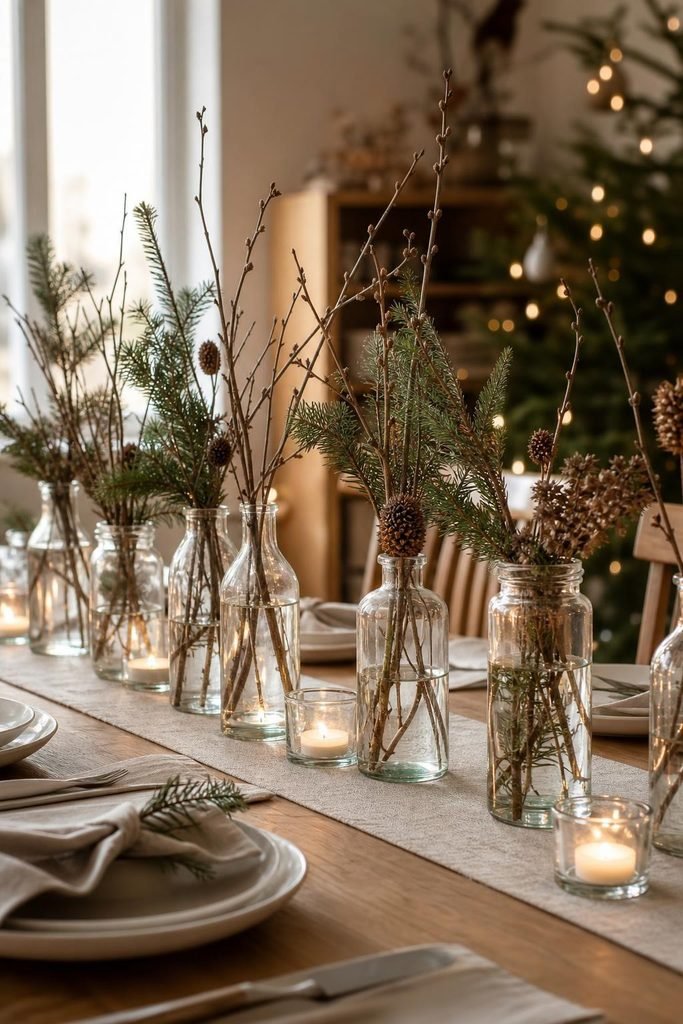
Have several matching food jars or bottles waiting for reuse? Fill them with short bare twigs, evergreen tips, or dried seed heads. Trim each stem to about twice the container’s height for balanced proportions. Repeat the bottles down a table where glass can catch candlelight or window light.
3. Knot a Tailored Fabric Garland
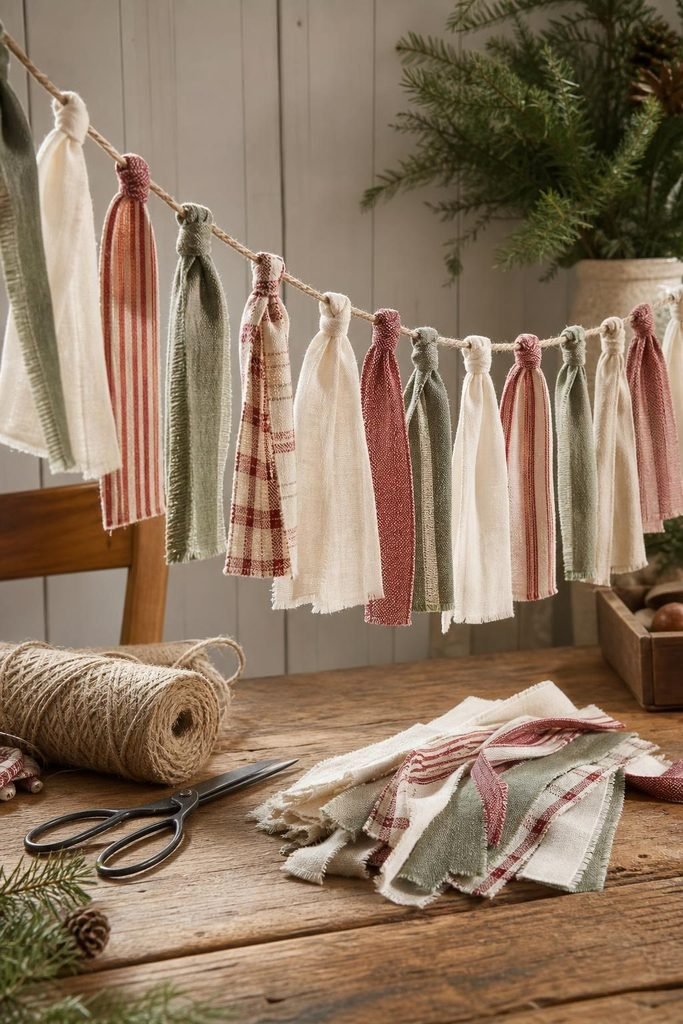
This suits anyone with an old shirt or sheet, but skip very thin fabric that tears. Cut one-by-six-inch fabric strips, then knot them at even spaces along saved twine. Trim every frayed edge to a similar length. Neat spacing keeps the finished garland soft and tailored.
4. Layer Folk Ornaments From Cardboard
Flat cardboard ornaments can look unfinished without texture and repeated shapes. Trace glasses, cookie cutters, or jar lids onto cereal boxes, then stack contrasting cutout layers. Brush each layered folk ornament with diluted glue and dust it lightly with flour for matte snow. Repeat one motif across the set for a clear, collected look.

5. Twist a Foraged Mantel Rope
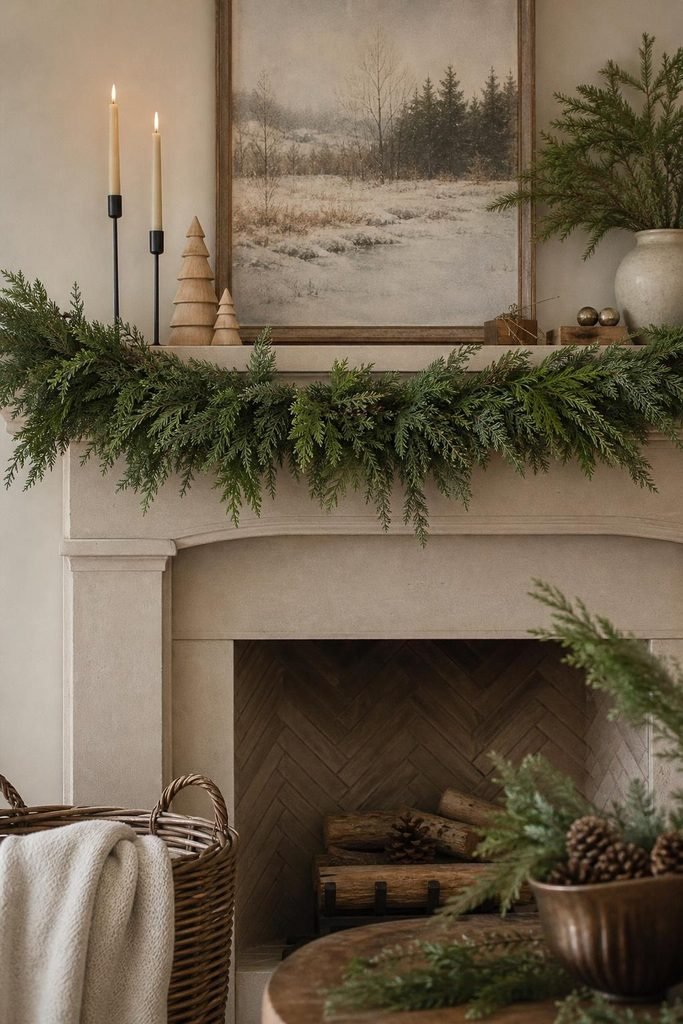
Overlap 12-inch evergreen bundles around reused string for a full mantel rope. Secure each bundle with saved twist ties, then taper both ends for a neat finish. Gather windfallen or recently pruned tips, and keep drying greenery far from candles and fireplaces.
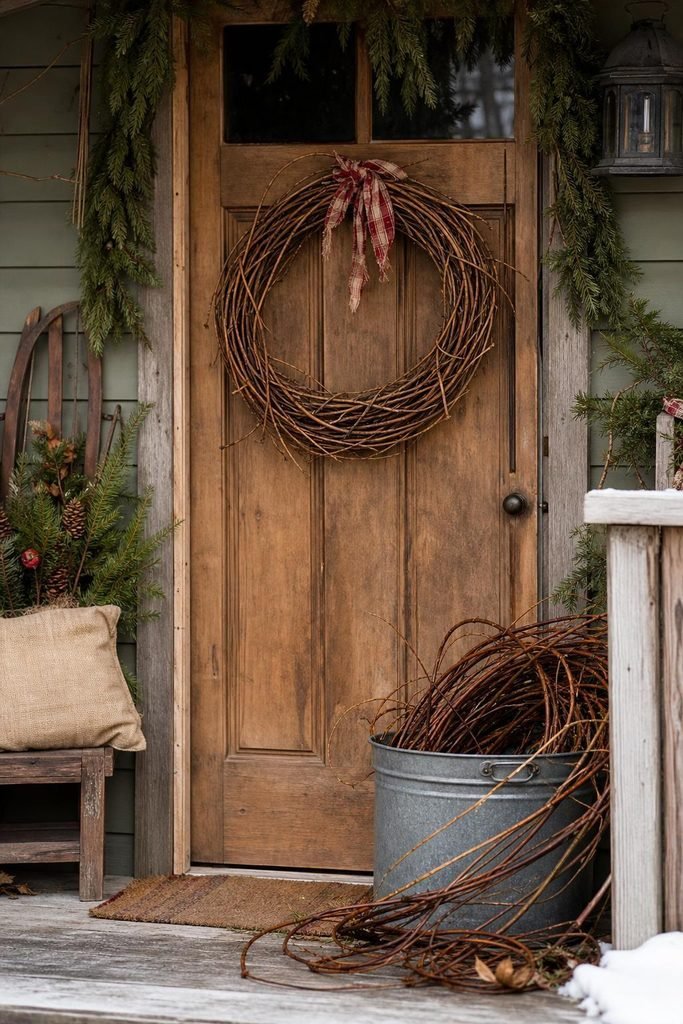
6. Weave a Bare-Vine Door Wreath
Soak flexible vines first, so they bend without snapping during shaping. Coil grapevine or willow whips around a bucket to create a free wreath form. Add one fabric-scrap bow, and avoid unknown vines that look like poison ivy.
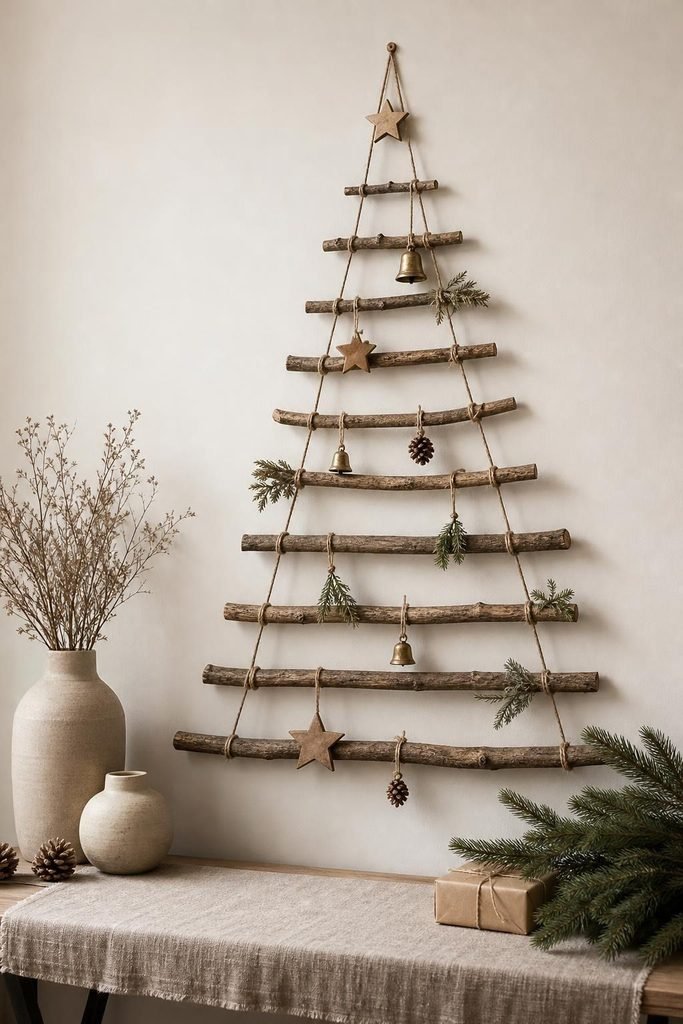
7. Build a Graduated Branch Wall Tree
Random branch sizes can make a wall tree look uneven and hard to hang. Cut straight fallen sticks into graduated lengths, ranging from about 8 to 30 inches. Lash them into horizontal tiers with existing twine, then hang the tree from a picture hook. Use only a few lightweight keepsakes to protect its shape.
Start With Fallen Branches
A branch wall tree offers a useful starting point because its clean shape can guide the rest of the room. Repeat its natural brown tones through pinecones, bare vines, or small winter branches. For a calmer look, leave open space between decorations and limit each piece to one simple detail. A fabric bow, matte finish, or short length of twine often feels more polished than layers of extras.
Check every gathered material before bringing it indoors. Brush away loose dirt, let damp wood dry, and discard anything with mold or insects. Start today by collecting five straight fallen sticks, including one close to 30 inches long.